Oh girl, if you’re like me and just craving that little slice of backyard paradise without nosy neighbors peeking in, a DIY privacy fence for beginners is totally the way to go. I remember when I first moved into my cozy little house, the yard felt so exposed – like everyone could see right into my chill zone. It was time to get crafty and build something simple that screamed “private oasis” without breaking the bank.
I put this article together because I know how overwhelming it can feel starting from scratch, especially if you’re not a pro with tools. Last summer, I tackled my first fence project using just some old pallets and string lights, and honestly, it transformed my space – though I did hammer my thumb once, ouch. Sharing these ideas feels like passing on that beginner-friendly magic to you.
By the end, you’ll have 25 easy inspirations to spark your own DIY privacy fence adventure. Trust me, you’ll be sipping lemonade in your secluded spot in no time.
25 Super Simple DIY Privacy Fence Ideas for Total Beginners
Flowery Backyard Fence Vibes
You know, this setup with the trampoline and blooming flowers against the fence just screams fun family vibes while keeping things private. I tried something similar in my yard last spring, adding wildflowers along the base, and it not only blocked the view but attracted butterflies – total win. If you’re starting out, grab some affordable fencing panels and plant climbers; it’ll grow into your personal hideaway. Oh, and don’t forget to water them regularly, or you’ll end up with wilted dreams like I did once.
Checkered Patio Wall Charm
This black and white checkered wall behind the lawn chairs is such a quirky way to add privacy without feeling boxed in. Imagine lounging there with your morning coffee, totally shielded from the street – I did this with painted plywood last year, and it was easier than I thought, though I messed up the pattern a bit at first. You could totally customize it with your favorite colors for that personal touch.
Potted Plant Fence Topper
Placing potted plants and flowers on top of a wooden fence like this adds height and a touch of nature’s privacy screen. When I experimented with this in my side yard, it turned a plain fence into a lush barrier, but I learned the hard way to secure those pots during windy days. It’s perfect for beginners since you can start small and expand as your green thumb grows. You might even harvest some herbs from them for your next salad.
Garden-Adjacent Wooden Barrier
A simple wooden fence next to a small garden keeps your veggies safe and your space secluded. I built one like this for my tomato patch, using reclaimed wood, and it was my first real DIY win – though the posts weren’t perfectly straight, which added character. Give it a try if you want something rustic and easy to assemble over a weekend.
Twinkling Fence Lights Setup
Those lights draped along the fence side create a magical evening privacy glow. Last fall, I strung some up on my own fence, and it not only lit up the yard but made nosy glances impossible after dark. You can source solar lights for an eco-friendly twist, and honestly, it’s so beginner-proof – I had mine up in under an hour, despite tangling the wires twice.
Mobile Slatted Bench Idea
This wheeled wooden slatted bench doubles as a movable privacy screen. I rolled one into place during a backyard BBQ once, and it instantly created a cozy corner away from the neighbors’ view. Super handy for renters or anyone who likes flexibility, and you can build it with basic lumber – just watch your fingers with the saw, like I should have.
Plant-Lined Wooden Fence
Lining a wooden fence with plants and flowers turns it into a living privacy wall. When I added ivy to mine, it grew faster than expected and provided that extra seclusion I craved. It’s a great starter project; pick hardy plants, and you’ll have a green fortress in no time. Plus, the bees love it, which is a sweet bonus.
Metal-Slatted Grass Fence
A wooden fence with metal slats offers durable privacy next to your lawn. I incorporated metal accents in my fence redo, and it held up through storms way better than plain wood. If you’re new to this, mix materials for strength – you might surprise yourself with how pro it looks, even if the alignment is a tad off like mine was.
Flower-Filled Fenced Area
This enclosed spot with flowers and grass is like a secret garden hideout. Building something similar helped me carve out a reading nook in my yard, though I underestimated the weeding involved. You can use affordable wire fencing and let nature fill in the gaps for effortless privacy.
Bush-Surrounded Wooden Fence
Surrounding a wooden fence with grass and bushes boosts that natural barrier feel. I planted shrubs around mine last year, and now it’s like a green wall – perfect for blocking views while blending in. Beginners, start with low-maintenance bushes; it’ll grow into something amazing without much fuss. Oh, and trim them occasionally, or they’ll take over like mine almost did.
Painted Floral Fence Art
A painted fence with flowers and butterflies adds artistic privacy flair. I got creative with stencils on my old fence, turning it into a colorful screen, but the paint dripped a bit – embracing the imperfections made it mine. You could do this in an afternoon with weatherproof paint for a fun, beginner twist.
Large Planter Privacy Wall
Those big planters against the house create a grassy privacy divide. Setting up similar ones shielded my patio perfectly, and I even grew herbs in them for easy kitchen access. It’s ideal if you’re short on space – just fill with soil and plants, and voila, instant seclusion. I overwatered mine at first, but hey, live and learn.
Clean Backyard Fence Refresh
This tidy backyard setup is all about that fresh, private vibe. I revamped my yard like this, clearing clutter and adding a simple fence, which made outdoor hangs so much more relaxing. For beginners, focus on cleaning first – it makes the fencing part feel less daunting.
Repainted Old Fence Makeover
Transforming an old fence with a fresh paint job renews its privacy power. I did this to my weathered one, matching the original color, and it looked brand new – though I spilled paint on the grass, oops. You can tackle it with a brush and some elbow grease for quick results.
Vertical Herb Garden Fence
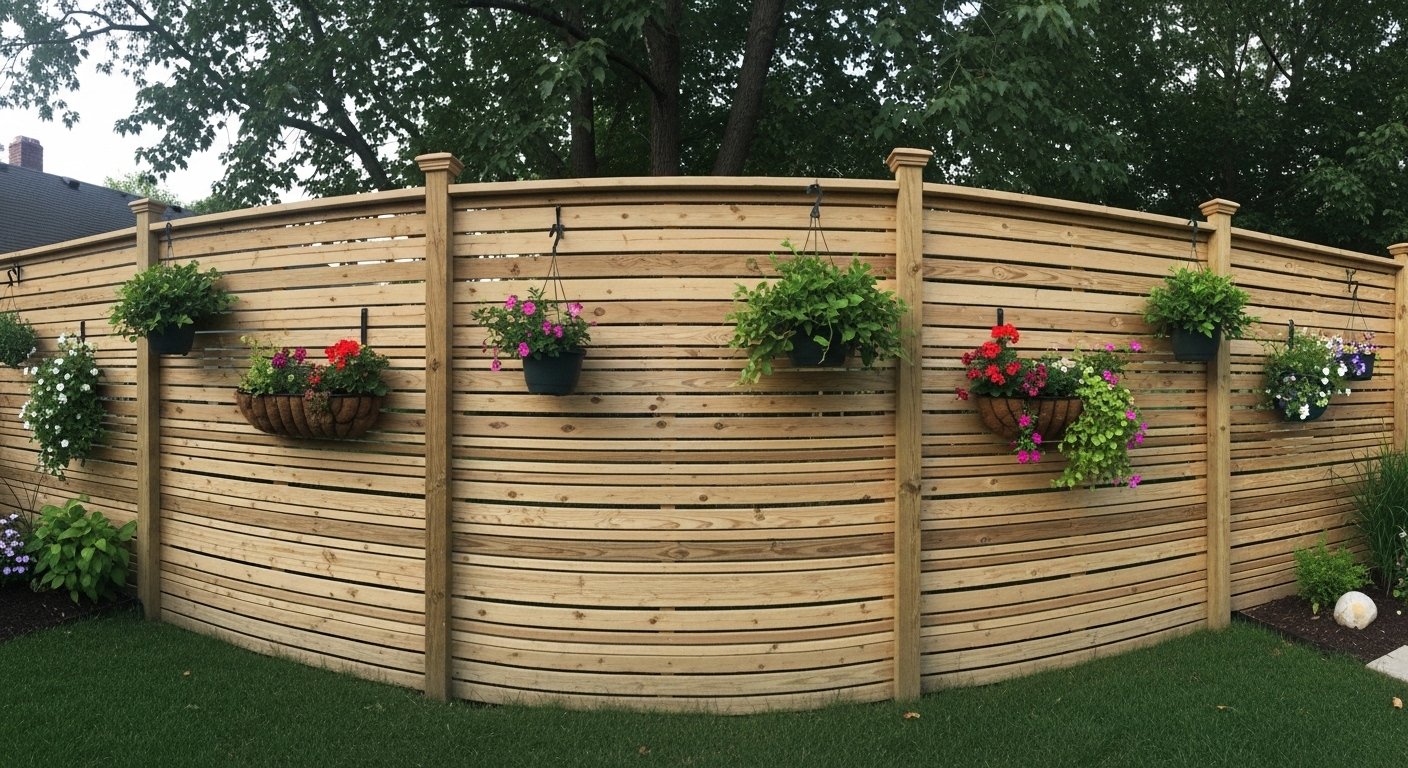
Hanging potted plants on a wooden fence for a vertical herb garden is genius for privacy and snacks. Last season, I hung basil and mint on mine, creating a fragrant screen that kept neighbors out of sight. It’s super easy to install hooks and pots – you’ll love picking fresh herbs right from your fence. Just ensure good drainage, or you’ll have soggy roots like I dealt with initially.
Metal-Wood Plant Fence
A mix of metal and wood with climbing plants offers sturdy, green privacy. Combining elements like this in my project added texture and blocked views effectively. Beginners, source materials from scrap yards for budget-friendliness – it turned out way cooler than expected.
Pallet Plant Garden Screen
Using wooden pallets filled with plants creates an upcycled privacy garden. I stacked pallets for mine, planting succulents, and it became a low-cost barrier – though sanding them took forever. You can repurpose old ones easily, adding that eco-chic vibe to your yard.
Lined-Up Potted Fence
Aligning potted plants against a wooden fence builds a portable privacy line. This worked wonders for my balcony, where space is tight, and I rearranged them seasonally. It’s a no-tools-needed idea for absolute beginners – pick colorful pots to match your style. I accidentally knocked one over once, but it was an easy fix.
Outdoor Seating Privacy Screens
Wooden privacy screens with potted plants around seating areas keep things intimate. I set up a similar spot for summer evenings, and it felt like my own little cafe – privacy included. Mix in some cushions for comfort, and you’ve got a beginner’s dream setup.
Tree-Lined Fence Backdrop
A wooden fence next to trees and parked cars provides everyday privacy. Incorporating trees like this in my yard design added natural height and shade. For starters, plant young trees along the fence – they’ll mature into perfect screens over time.
Grassy Outdoor Living Fence
This outdoor area with grass, stairs, and side plants uses the fence for seamless privacy. I designed a similar layout, adding steps for access, and it made my space feel bigger yet more secluded. You could include perennials for year-round green – it’s forgiving for newbies.
Lattice Wooden Fence Design
A lattice pattern on a wooden fence allows light while ensuring privacy. I installed lattice toppers on mine, letting vines creep through, which softened the look beautifully. Beginners, this is quick to add to existing fences – just secure with screws, and done.
Grassy Field Wooden Fence
Placing a wooden fence in a grassy area creates open yet private zones. This reminded me of my childhood yard, so I recreated it simply with posts and rails. It’s basic enough for anyone starting out – add wildflowers for extra charm. My first attempt wobbled a little, but stakes fixed that right up.
Rope Fence with Flowers
A rope fence close-up with background flowers offers nautical privacy vibes. I tried weaving rope between posts for a beachy feel, and it surprisingly blocked views well. Super affordable and fun to DIY – you might knot it imperfectly at first, like me, but that’s the charm.
Green Patio Privacy Fence
This green fence next to a patio with chairs and table is ideal for al fresco dining privacy. Setting up mine transformed lazy afternoons, though I chose a shade too bright initially – easy repaint. Beginners, opt for vinyl for low maintenance; it’ll last through seasons without fading.
How to Actually Make This Work For You
Start by measuring your space accurately so you don’t end up with extra materials or awkward gaps, like I did on my first try, and always check local regulations before digging posts to avoid any surprises. Pick beginner-friendly materials such as pre-cut lumber or bamboo screens that snap together easily, and remember to seal wood against weather for longevity – it’ll save you headaches down the line. If you’re feeling unsure, sketch a quick plan on paper first; it helps visualize and keeps things fun without overwhelming you.
What tools do I need for a beginner DIY privacy fence?
You’ll want basics like a hammer, screwdriver, level, and measuring tape – nothing fancy. I started with just those and built mine over a weekend. Add safety gear like gloves to keep it smooth.
How much does a simple DIY privacy fence cost?
It can be under $200 for a small section using reclaimed wood or affordable panels from the hardware store. My first one cost about $150, including plants. Shop sales to keep it budget-friendly.
Can I make a privacy fence without digging holes?
Absolutely, use freestanding screens or planters for a no-dig option that’s renter-approved. I went this route once and loved how easy it was to move around. It’s perfect if you’re testing ideas.
What’s the easiest material for beginners?
Bamboo or lattice panels are super forgiving and quick to install. I messed up less with bamboo than wood slats. They look natural and provide instant privacy without pro skills.